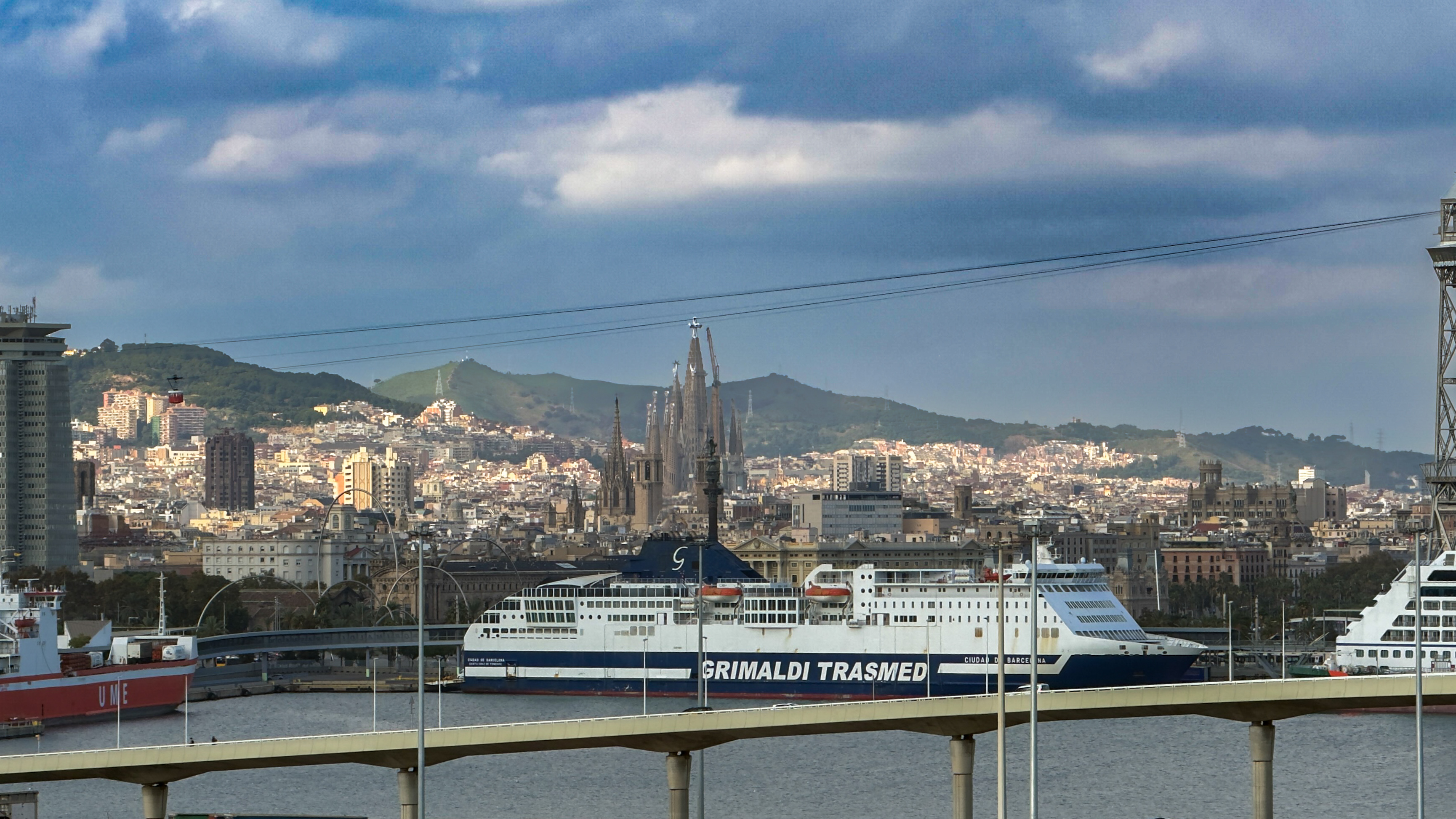
Cartagena, Spain, made me fall in love with my profession all over again. That’s a lot to ask of a city, and far more than I expected when I booked one of the shore excursions on my transatlantic cruise from Europe to Florida aboard Royal Caribbean’s Brilliance of the Seas.
That morning, the ship slowly sailed into a bay surrounded by hills, crowned by old fortresses that for centuries had watched other ships arrive. From the deck, I knew right away I wasn’t facing the hot, humid Cartagena I knew, Cartagena de Indias in Colombia. The air felt crisp, with the kind of autumn chill typical of the Mediterranean, something we never experience in the Caribbean. Few cities welcome a cruise ship so close to their history: the pier is just steps from the old town, and even from the ship you can sense this is no ordinary port of call.
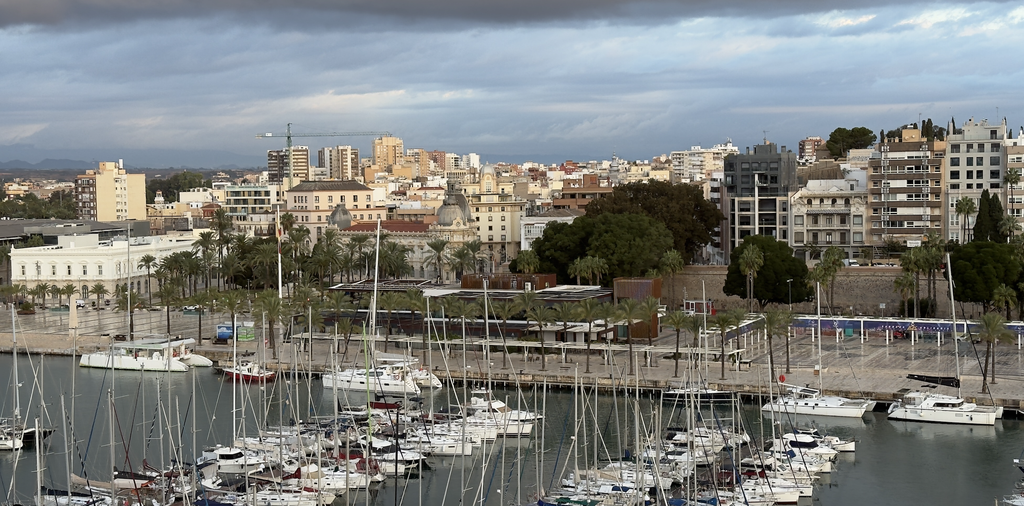
A Tale of Two Cartagenas
My 14-night itinerary includes stops at five different ports and eight days at sea. Cartagena was one of the ports I was most excited to visit. Not only because I had never been there, but because I knew very little about it, other than that it gave its name to Cartagena de Indias, on Colombia’s Caribbean coast, where I lived for several years. I was eager to compare the two Cartagenas and discover what sets the European one apart from its American namesake.
What I didn’t expect was to find so many similarities. Both are walled cities, born facing the sea and built to defend themselves from it. Both have castles perched on their hills, and to this day, both are home to their country’s navy. But the Spanish Cartagena is much older. Before it was Spanish, it was Carthaginian, founded by Hasdrubal around 227 BC as Qart Hadasht, and later Roman, as Carthago Nova. Walking its streets means crossing more than two thousand years of history, sometimes on a single block.
Why Book an Excursion When the City Is Right Next to the Port?
That’s why I decided to book one of the excursions offered by the cruise line, even though the port is right next to the city and it’s easy to explore on your own. In this case, I chose a guided walk, the Cartagena Walking Tour, which cost me $62.99.
My reasoning was simple: in a port where you can walk off the ship and into town, an excursion’s value isn’t the transportation, but the person telling you the city’s story. Cartagena is a place where history is literally beneath your feet. Without someone to help you read it, it’s easy to walk right past a treasure without noticing.
How to Book Royal Caribbean Shore Excursions
When you book an excursion with Royal Caribbean in advance, you’ll get a discount that can be 10%, 25%, or even more. Activities that carry an extra cost can be booked through the app or the official website in your Cruise Planner, and they’re paid in full at the time of booking. The price I paid for the Cartagena Walking Tour already included a 20% discount for booking early.
Another advantage is peace of mind. When you book through the cruise line, the ship knows where your group is, and the excursion is designed to get you back on time. On a port day when everything revolves around the “all aboard” time, that’s no small detail.
Excursion Day

Once you’ve booked your shore excursions, you’ll find an envelope with your tickets in your stateroom on embarkation day, listing the meeting time and place. On the day of the excursion, you’ll usually meet your group in the ship’s theater, and from there the crew will take you to the starting point of your tour.
Verónica, the Best Guide I’ve Ever Had
That’s where we met our guide, Verónica. From the very first minutes, her tour was so detailed and insightful, covering not just the history of the city but of Spain itself, that I began to suspect I was in the presence of someone with serious academic training. I asked her what she had studied, and she told me that, just like me, she was an art historian. She may well be the best guide I’ve ever had, and she reminded me why these activities are so worth booking, even when, as in this case, you could explore the port on your own.
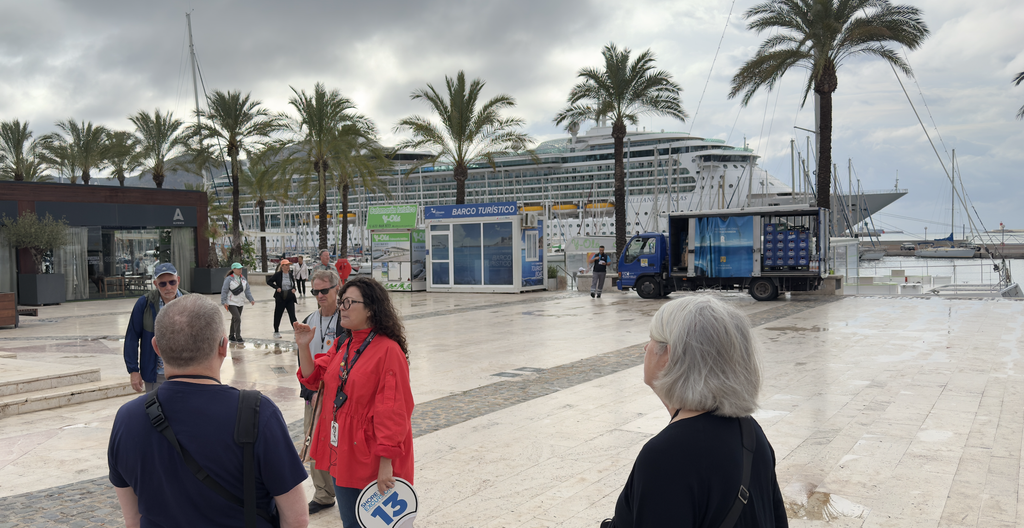
I believe the success of these excursions, when they’re done well, doesn’t depend so much on whether they’re entertaining. It depends on whether they let you discover a place not through the eyes of a “tourist” passing through for a few hours, but with a real sense of the city’s past and present, its complexity, and the challenges it faces today. In short, whether they let you get to know the local culture more deeply.
The Theater No One Knew Existed
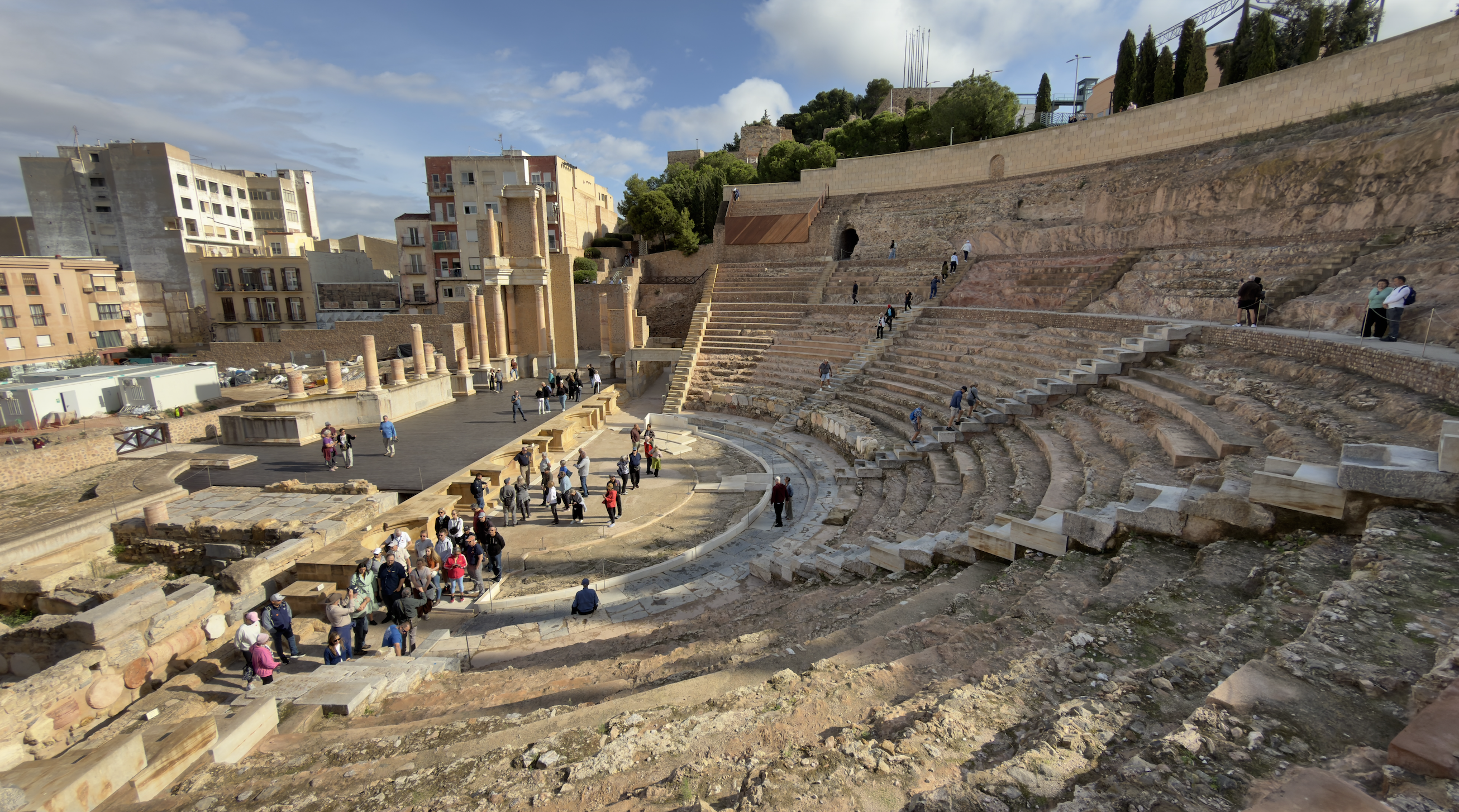
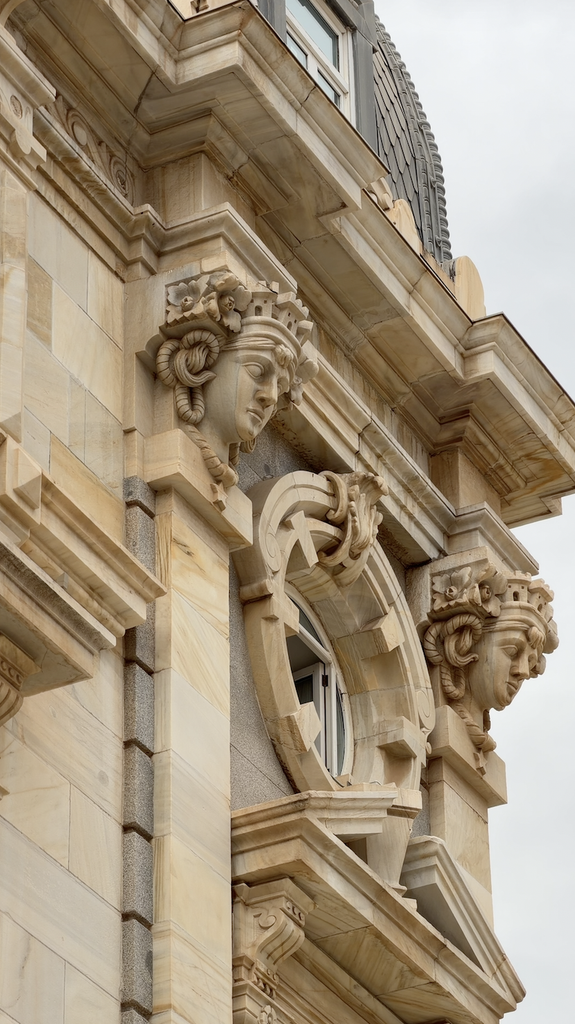
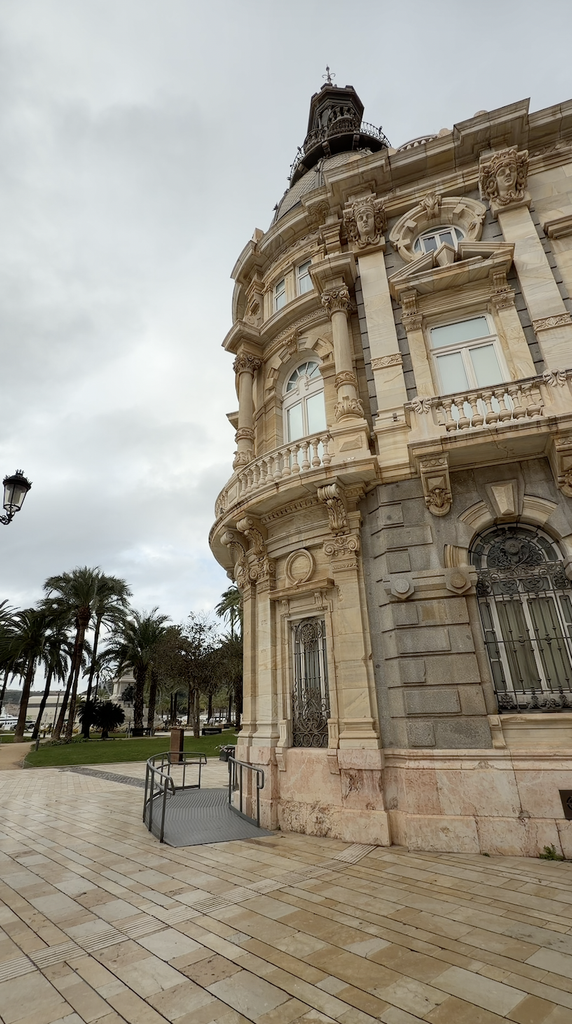
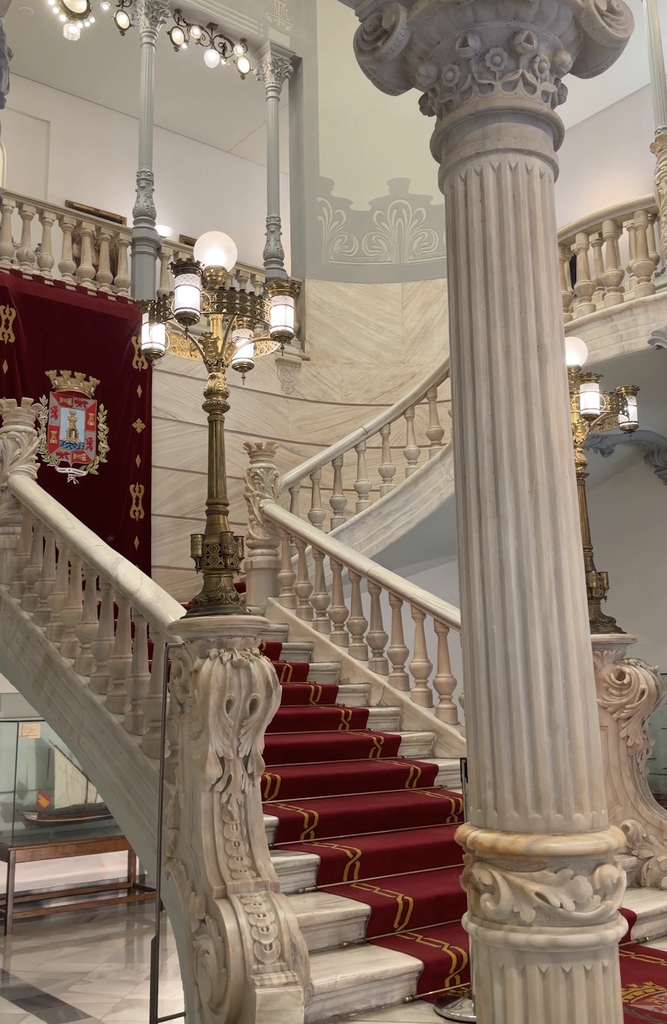
Our three-and-a-half-hour tour included entry to beautiful historic buildings, such as the stunning Modernista-style Town Hall (Spain’s take on Art Nouveau), and to the Roman Theater Museum, without a doubt the highlight of the tour.
The story of this theater sounds like something out of a novel. For centuries, no one knew it existed. In 1988, construction work in the heart of the old town uncovered the remains of a Roman theater built during the reign of Emperor Augustus, with room for some six thousand spectators. Houses, streets, and even a cathedral had been built on top of its seating, and the cathedral’s ruins can still be seen above the theater. The city had literally been living on top of it without knowing.
The museum, designed by architect Rafael Moneo and opened in 2008, turns the visit into a journey through time. You enter through a 19th-century palace, walk through galleries filled with pieces found during the excavations, cross a passage that runs beneath the street, and finally step out in front of the theater.
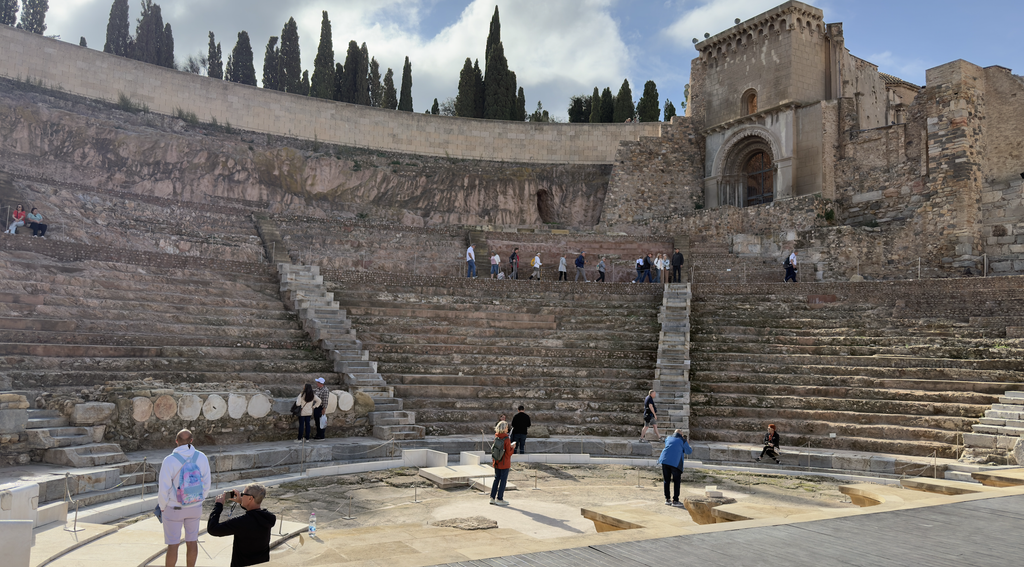
That moment when the space opens up and the theater appears is, ironically, a theatrical experience in itself. You feel as if you’ve traveled back in time, and you understand how important these spaces were, not only as a stage for the arts, but for the social life of an entire city.
Beyond its ancient history, Cartagena was transformed by this discovery. This and other finds sparked an urban renewal project and set in motion the full machinery of heritage protection to preserve them. Today, a walk through the center takes you from a Modernista façade to a Roman ruin to an 18th-century city wall, as if the city had decided to show all of its layers at once.
A Lesson About the Past
In this sense, Cartagena is a perfect example of how history, when it’s respected and valued, can stay alive among us and teach us about who we were and who we can become. Cartagena has allowed itself to change in order to be, in its present, what it was in its past, without denying or forgetting its history.
I wouldn’t have learned this if I had simply wandered its streets on my own, and I think it’s an excellent lesson for our lives and our relationship with the past. I thought about my other Cartagena, Cartagena de Indias, and how heritage can either be a source of shared pride or a stage set for tourists, depending on how we choose to care for it. Cartagena, Spain, showed me that the first option is possible.
So, Are Royal Caribbean Shore Excursions Worth It?
This was my second walking tour with Royal Caribbean. The first was in Nassau, in the Bahamas. It’s a destination with a very different history, but it was no less interesting, and it took me to corners of the city I would never have found on my own.
Two such great experiences in two such different ports don’t feel like a coincidence to me. Part of Royal Caribbean’s job is selecting the local operators it works with, and, in my experience at least, it shows in the quality of its walking tours.
Besides, it’s always better to come away with real knowledge of a destination than to settle for what a text on a museum wall can tell you, at best. A good guide doesn’t just recite dates: they help you understand why a city is the way it is, and no museum label can do that.
So yes, they’re worth it. When an excursion is done right, you step off the ship as a tourist and come back aboard with questions. And for me, there’s no better reason to keep traveling.
Contact us to start planning your Royal Caribbean or Disney Cruise Line vacation.