Ponta Delgada, on São Miguel Island in Portugal’s Azores archipelago, and Bermuda both looked like paradise. The first, with its striking volcanic calderas cradling blue and green lakes; the second, with its iconic pink-sand beaches and coral reefs. I had everything ready to visit both on my 14-night transatlantic cruise from Barcelona to Fort Lauderdale aboard Royal Caribbean’s Brilliance of the Seas: shore excursions booked in advance to see the lakes and the beaches, the restaurants and local dishes I wanted to try, the photos I was hoping to take. Nature, however, had other plans.
When you choose a cruise for your vacation, several factors come into play: whether the dates match your time off, whether the ship is the right fit for you and your family, and whether the itinerary takes you to the places you want to see.
I have to admit I didn’t choose this cruise for Ponta Delgada or Bermuda, but for the Atlantic crossing itself. I needed to travel from Spain, where I live, to Florida for a work event, and doing it by sea was the perfect chance to try a new way of traveling and discover new destinations. Even so, when the captain announced that bad weather along our route would force a change in the itinerary, I felt a small pang of disappointment.
On day six of our 14-night sailing from Europe to the Americas, the Brilliance of the Seas was scheduled to call at Ponta Delgada. Instead, the ship turned south to avoid a tropical depression and stopped at Santa Cruz de Tenerife, in Spain’s Canary Islands. Later on, the call at Bermuda, planned for day eleven, was replaced with a stop in Nassau, Bahamas, on the last day of the voyage.
Why Do These Changes Happen?
Last-minute itinerary changes aren’t common, but they do happen. Sometimes the captain has to reroute the ship to avoid storms, and ports are swapped to keep the arrival schedule on track, since the ship must finish its voyage on time to welcome the next guests. Other times, bad weather makes it impossible for the ship to dock safely at the scheduled port. In rarer cases, an emergency on board forces a change of plans, as happened with several ships during the COVID-19 pandemic.
It’s important to know that, in every case, these decisions are made after careful evaluation by the crew, always with guest safety as the top priority.
It’s also worth knowing that when you book a cruise, you accept a passenger contract that allows the cruise line to change the itinerary, substitute ports, or cancel calls for reasons such as weather, without any obligation to compensate guests. What is usually refunded are the shore excursions booked through the cruise line and, in some cases, the taxes and port fees for the port that was missed. Royal Caribbean reviews refunds of those fees on a case-by-case basis.
In our case, the announcement came through two channels once we were already on board: first over the ship’s public address system, and then in writing, in a letter delivered to every stateroom. Keep that letter or take a photo of it. It’s the official document confirming the itinerary change, and it can come in handy if your travel insurance includes missed-port coverage.
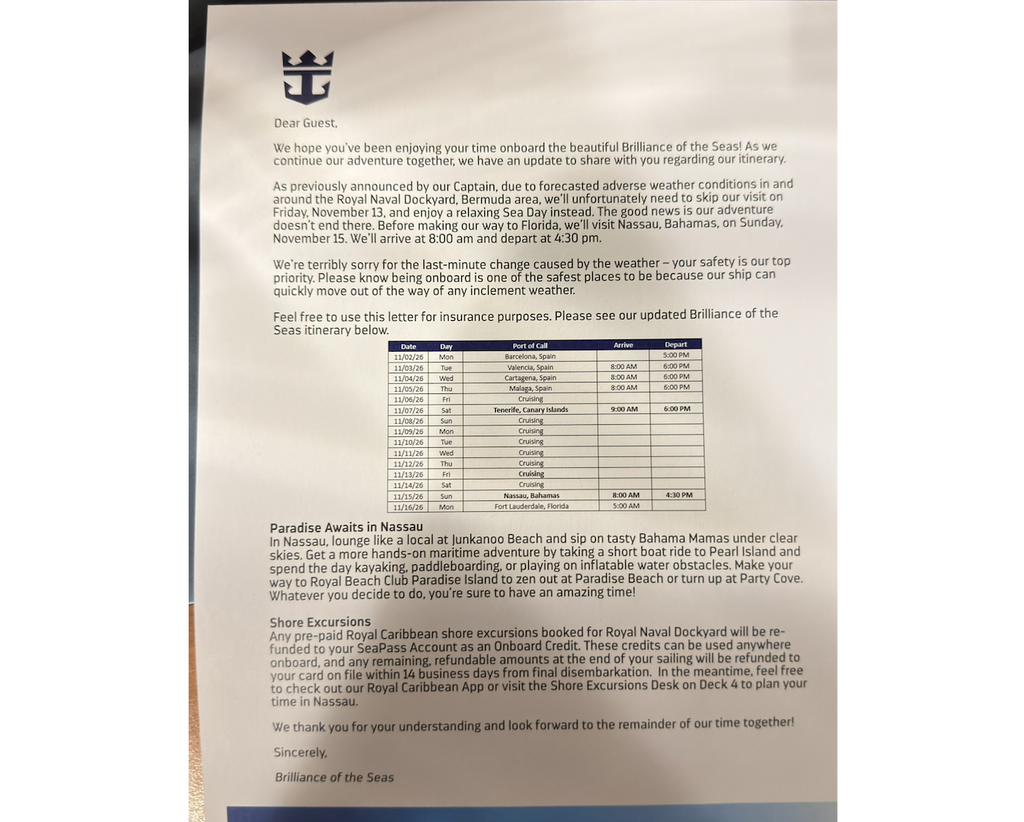
What Happens to Your Port Plans?
On this trip, I had booked shore excursions directly with Royal Caribbean in both Ponta Delgada and Bermuda: a tour of the crater lakes (Crater Lake Scenic Drive) in the first, and a beach transfer (Horseshoe Bay Beach Transfer) in the second. Both excursions were canceled automatically, and the amount I paid was refunded to my onboard account within a few hours of the announcement. Keep in mind that with this cruise line, pre-booked experiences such as shore excursions are paid in full at the time of booking.
If you book an excursion with an independent operator, you’ll need to check their cancellation policy yourself and request any refund that applies. That’s a very good reason to always book these experiences through the cruise line and save yourself a potential headache. If you still prefer an independent operator, check before you pay what happens if the ship doesn’t make it to port, and consider travel insurance that covers this kind of situation.
The New Ports on the Itinerary
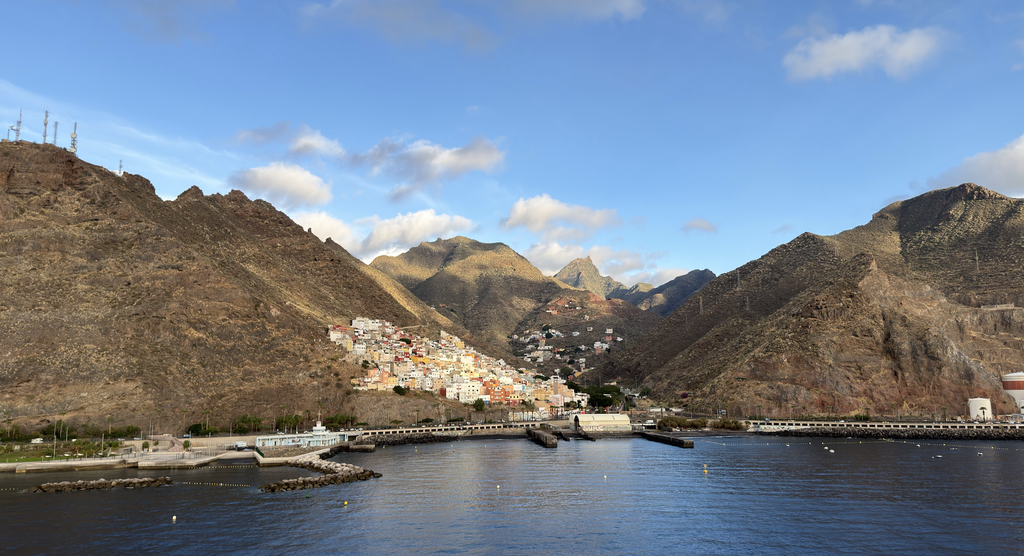
On my cruise, both destinations were replaced: Ponta Delgada with Santa Cruz de Tenerife, and Bermuda with Nassau, in the Bahamas. Royal Caribbean offered a few excursions in the new ports through its app, but I decided to explore them on my own.
They weren’t the ports I had been expecting, but they turned out to be a great opportunity to discover new destinations and let myself be surprised by different landscapes and experiences.
Again, these changes aren’t common, but it’s always a good idea to travel with an open mind about last-minute changes, and be ready to enjoy them.
Planning a Royal Caribbean cruise? Our travel agents can help you choose the right itinerary and book your shore excursions. Learn more at https://www.dreamsunlimitedtravel.com/royal-caribbean-cruises/index.htm